
Crafted By Hand, Cherished For Generations: The Story of Channapatna Toys
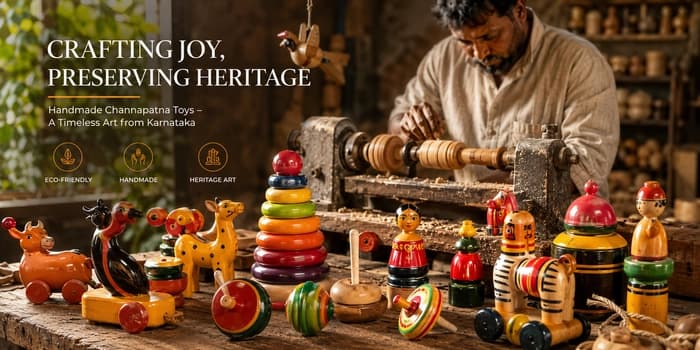
Channapatna Toys: The Timeless Legacy of India's Wooden Toy Craft
In a world increasingly dominated by mass-produced plastic products, Channapatna toys stand as a remarkable testament to India's enduring tradition of sustainable craftsmanship. Vibrant, safe, eco-friendly, and deeply rooted in cultural heritage, these handcrafted wooden toys are much more than playthings—they are living expressions of artistry, history, and human creativity.
At Atisrsti, we celebrate handmade traditions that connect generations, preserve cultural identity, and support artisan communities. Among India's many treasured crafts, Channapatna toy-making occupies a special place for its unique blend of functionality, beauty, and environmental consciousness.
The Birthplace of India's Wooden Toy Tradition
Nestled in the Ramanagara district of Karnataka, the town of Channapatna has earned global recognition as the "Toy Town of India." The craft traces its origins back several centuries and flourished under royal patronage. Over time, local artisans refined the techniques of wood-turning and natural lacquering, transforming simple wooden objects into colorful works of art.
Today, Channapatna toys enjoy Geographical Indication (GI) status, acknowledging their distinct cultural significance and ensuring the protection of this traditional craft from imitation.
The Art Behind Every Toy
What makes Channapatna toys truly extraordinary is the meticulous process through which they are created. Unlike factory-made toys, each piece is shaped, polished, colored, and finished by skilled artisans who have often inherited the craft through generations.
The process begins with carefully selected wood, traditionally sourced from species such as Wrightia tinctoria, locally known as Aale Mara or ivory wood. This wood is valued for its fine grain, lightweight nature, and excellent turning properties.
The artisan then places the wood on a lathe, where it is skillfully carved into various forms. This stage requires exceptional precision and years of experience. Even a minor variation in pressure can alter the final shape.
Once the form is achieved, the toy is polished using natural materials and colored through an ingenious lac-turnery process. Colored lacquer sticks are pressed against the rotating wooden surface, generating frictional heat that melts and transfers the color onto the wood. The result is a smooth, glossy finish that becomes an integral part of the toy rather than a superficial coating.
This seamless integration of color and wood gives Channapatna toys their characteristic brilliance and durability.
Natural Colors and Child-Safe Materials
One of the most admirable aspects of Channapatna craftsmanship is its commitment to safety and sustainability. Traditionally, artisans used vegetable dyes, natural pigments, and eco-friendly lacquers to create vivid shades of red, yellow, green, orange, blue, and brown.
Unlike many synthetic toys that may contain harmful chemicals, authentic Channapatna toys are crafted with child-safe materials. Their smooth surfaces, rounded edges, and non-toxic finishes make them ideal companions for young children.
Parents increasingly seeking environmentally responsible alternatives often find Channapatna toys to be a perfect blend of safety, aesthetics, and educational value.
The Beauty of Simplicity
A defining characteristic of Channapatna toys is their elegant simplicity. Rather than relying on electronic features or excessive ornamentation, these toys encourage imagination, tactile exploration, and creative engagement.
From stacking rings and rattles to spinning tops, pull-along animals, dolls, puzzles, and educational learning aids, every design reflects a thoughtful understanding of childhood development.
The geometric shapes, balanced proportions, and vibrant colors stimulate sensory learning while helping children develop motor skills, hand-eye coordination, and cognitive abilities.
This understated sophistication demonstrates how traditional artisans intuitively understood principles of design and child psychology long before modern educational theories emerged.
Sustainability at the Heart of the Craft
In today's age of environmental concerns, Channapatna toys offer a compelling example of sustainable production. The craft relies on renewable materials, minimizes waste, and uses techniques that consume relatively little energy compared to industrial manufacturing.
Every stage of production reflects a harmonious relationship between artisan and material. Wood shavings are often repurposed, natural finishes reduce environmental impact, and the longevity of the products discourages disposable consumption.
Purchasing handmade Channapatna toys is therefore not merely a consumer choice—it is a conscious investment in sustainable living and responsible craftsmanship.
A Living Heritage Passed Through Generations
Behind every toy lies a story of knowledge passed from master craftsmen to apprentices, from parents to children, and from one generation to the next.
Many artisan families in Channapatna have practiced the craft for decades, preserving specialized techniques that cannot be replicated by machines. The rhythm of the lathe, the precise application of lacquer, the selection of wood grain, and the understanding of proportions are skills refined through years of dedication.
Supporting this craft helps sustain livelihoods, preserve traditional knowledge systems, and ensure that future generations continue to benefit from India's rich artistic heritage.
Contemporary Innovation Meets Traditional Craftsmanship
While rooted in tradition, Channapatna artisans have continually adapted to changing tastes and global markets. Contemporary designers frequently collaborate with craftsmen to create modern interpretations of classic forms.
Today, alongside traditional toys, artisans produce home décor items, educational tools, jewelry, stationery accessories, tableware accents, and lifestyle products. These innovations demonstrate the remarkable versatility of the craft while maintaining its authentic character.
The ability to evolve without losing its essence is one of the reasons Channapatna craftsmanship remains relevant in the modern world.
Why Channapatna Toys Matter Today
In an era where consumers increasingly seek authenticity, sustainability, and meaningful products, Channapatna toys embody values that resonate deeply with contemporary lifestyles.
They represent:
- Eco-friendly and sustainable craftsmanship
- Non-toxic and child-safe materials
- Preservation of India's cultural heritage
- Support for artisan communities
- Encouragement of imaginative play
- Timeless design and durability
- Handmade uniqueness in a mass-produced world
Each toy carries the touch of human hands, the wisdom of generations, and the beauty of traditional craftsmanship.
Celebrating Handmade Excellence with Atisrsti
At Atisrsti, we believe handmade products are more than objects—they are cultural narratives shaped by skilled artisans and enriched by centuries of tradition. Channapatna toys beautifully illustrate how craftsmanship, sustainability, and creativity can come together to create products that are both functional and meaningful.
By choosing authentic handmade creations, we help preserve invaluable artistic traditions while fostering a future that values quality, sustainability, and human ingenuity.
Channapatna toys remind us that true craftsmanship never goes out of style. Their vibrant colors, graceful forms, and enduring charm continue to inspire generations, making them one of India's most treasured contributions to the world of handmade art.